Ceremony Script
Having a close friend or family member officiate your wedding is one of the most meaningful choices you can make for your ceremony. It's personal, it's special, and it puts someone who truly knows and loves you at the center of one of the biggest moments of your life. But once the excitement of asking them settles in, the question almost always follows - so… how do we actually write this thing?
Whether your officiant has never done this before or they're a natural in front of a crowd, a well-written ceremony script makes all the difference. Here's how to approach it.
Photo by Alison Tapp Photography
Get Legally Prepared First
Photo by Just Jessie Photos
Before anything else, make sure your officiant is legally ordained in your state. This is a quick and easy step - most people go through an online ordination - but it needs to happen well before the wedding day.
Important Tip: Make sure your state recognizes online ordination. As a Charlotte wedding planner, I always tell my couples that online ordination in North Carolina is a gray area, so it’s safer to use someone who was ordained in a brick and mortar institution: minister, rabbi, etc.
You'll also want to check your county's specific requirements for signing the marriage license, since the rules can vary. Your wedding planner can help you navigate this so nothing falls through the cracks.
Decide on the Tone Together
Photo by Chasing Stars Media
Before your officiant writes a single word, the three of you should sit down and align on tone. This is the foundation everything else is built on.
Ask yourselves:
Do you want the ceremony to feel formal, or relaxed and conversational?
Should it be emotional, lighthearted, or a mix of both?
Are there any religious or cultural elements to include?
What do you not want - inside jokes that not everyone will get, anything too long, anything too generic?
The ceremony should feel like you - not a template someone pulled from the internet. The more specific and honest you are in this conversation, the better the script will be.
Know What Goes Into a Ceremony Script
Photo by Mary Mosley Photography
A typical ceremony script includes the following elements, and your officiant should know what each one involves before they start writing:
Welcome - a brief opening that sets the tone and acknowledges the guests
Opening words - a reflection on love, commitment, or the couple's relationship
Readings - optional, but a beautiful way to involve other people or add meaning
Address to the couple - the heart of the ceremony, where the officiant speaks directly to the two of you
Vow exchange - traditional, written, or a mix of both
Ring exchange - short, intentional, and meaningful
Pronouncement of marriage - the official moment
Recessional cue - the officiant introduces the couple and sends everyone into celebration mode
Not every ceremony needs every element. Keep what feels right and leave out what doesn't.
Write It From the Heart - With Some Structure
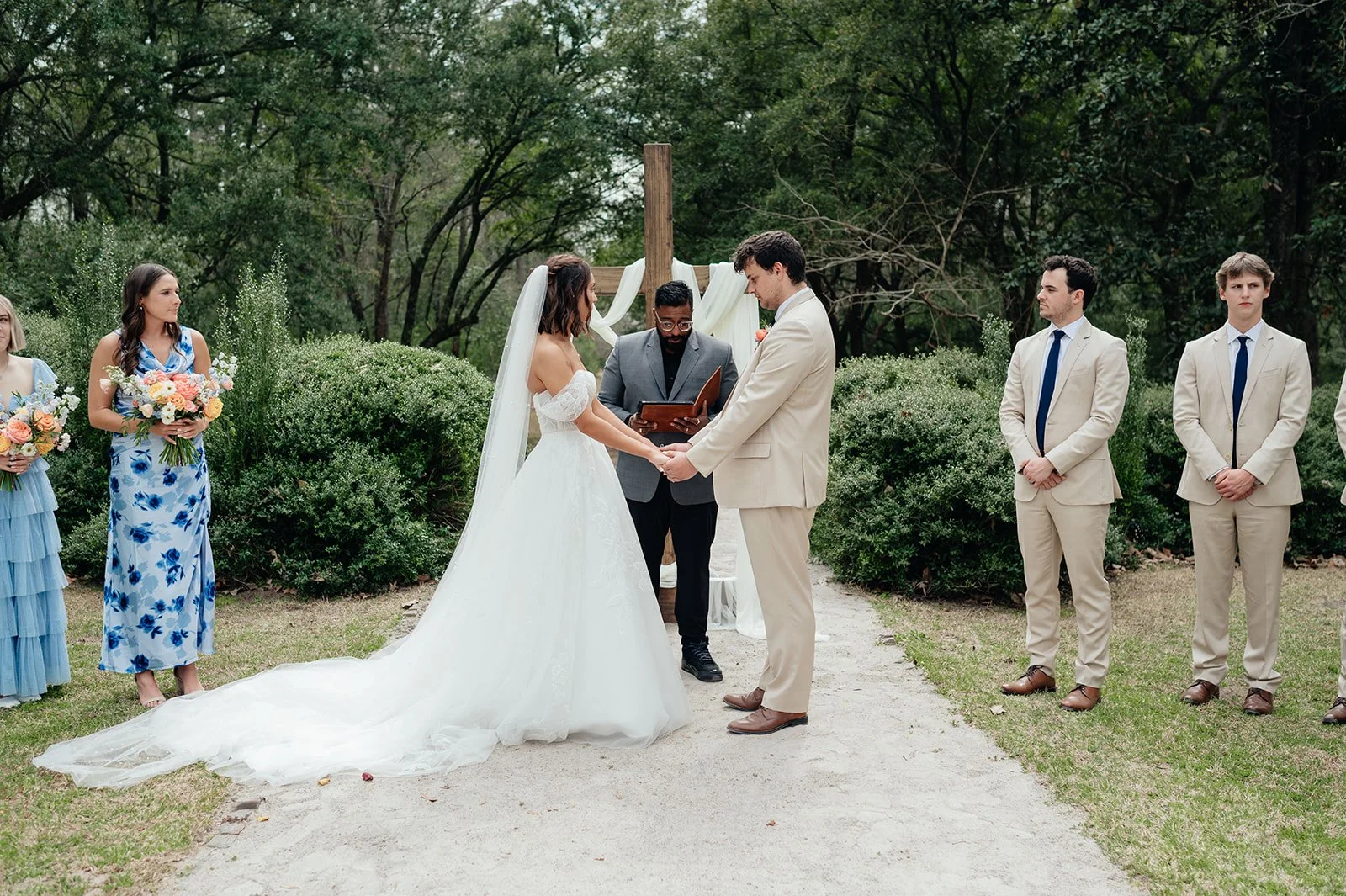
Photo by Carson Lillard Photography
The best personal officiant ceremonies feel like a story - because they are. Encourage your officiant to think about how they know you, what they've watched you build together, and what they genuinely believe about your relationship. That authenticity is what makes a personal ceremony so powerful.
At the same time, structure matters. A script that wanders loses the room. A good rule of thumb:
Welcome + opening: 2–3 minutes
Address to the couple: 3–5 minutes
Vows: 2–3 minutes per person
Ring exchange + pronouncement: 1–2 minutes
A ceremony that runs 20–25 minutes (including processional and recessional) hits the sweet spot for most couples and guests. Much shorter and it can feel rushed. Much longer and people start to feel it.
Give the Vows the Attention They Deserve
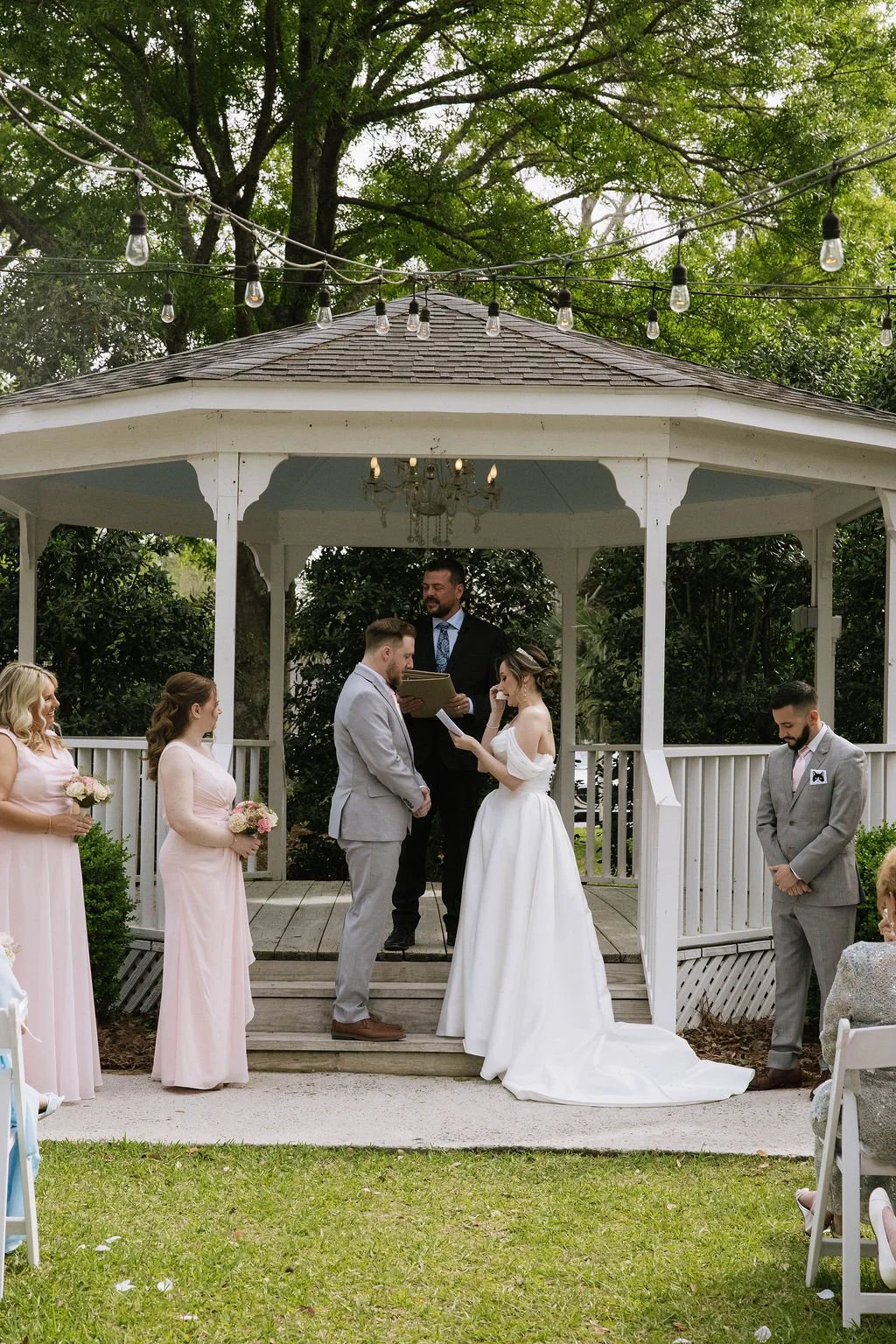
Photo by Mary Mosley Photography
Whether you're writing your own vows or using traditional ones, this section deserves its own dedicated conversation - separate from the rest of the script.
If you're writing your own:
Give yourselves a word or time limit so you're roughly the same length
Focus on specifics - the little things, the real moments, the promises that mean something to your relationship
Practice saying them out loud before the day so the words feel natural, not performed
Have a printed copy with you at the altar, even if you think you have them memorized
If you're using traditional vows, make sure your officiant walks you through the call-and-response format during the rehearsal so there are no surprises during the ceremony.
Include Personal Touches - but Keep Them Intentional
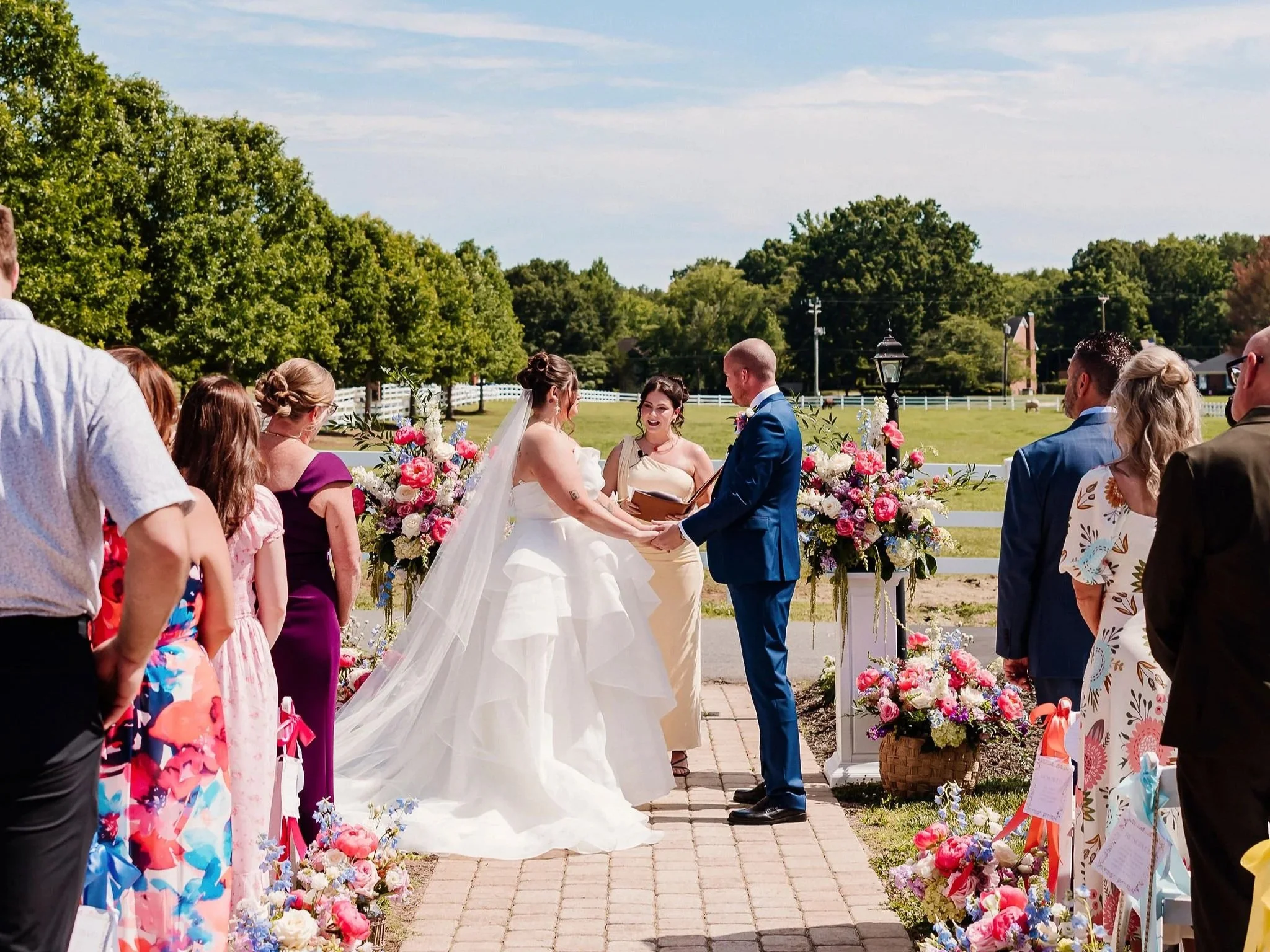
Photo by Kendal Mariee Photography
One of the biggest advantages of a personal officiant is the ability to include details that a stranger simply couldn't. The story of how you met, a moment that defines your relationship, the reason everyone in that room knows you belong together.
These personal touches are what make guests lean in. Just make sure they're chosen with intention:
Share one or two meaningful stories - not a full biography
Clear anything personal with the couple first
If a moment is funny, make sure it lands for everyone in the room, not just a few people
The goal is for every guest to feel like they just got a window into your relationship - not just the ones who already know the story.
Practice Out Loud — More Than Once
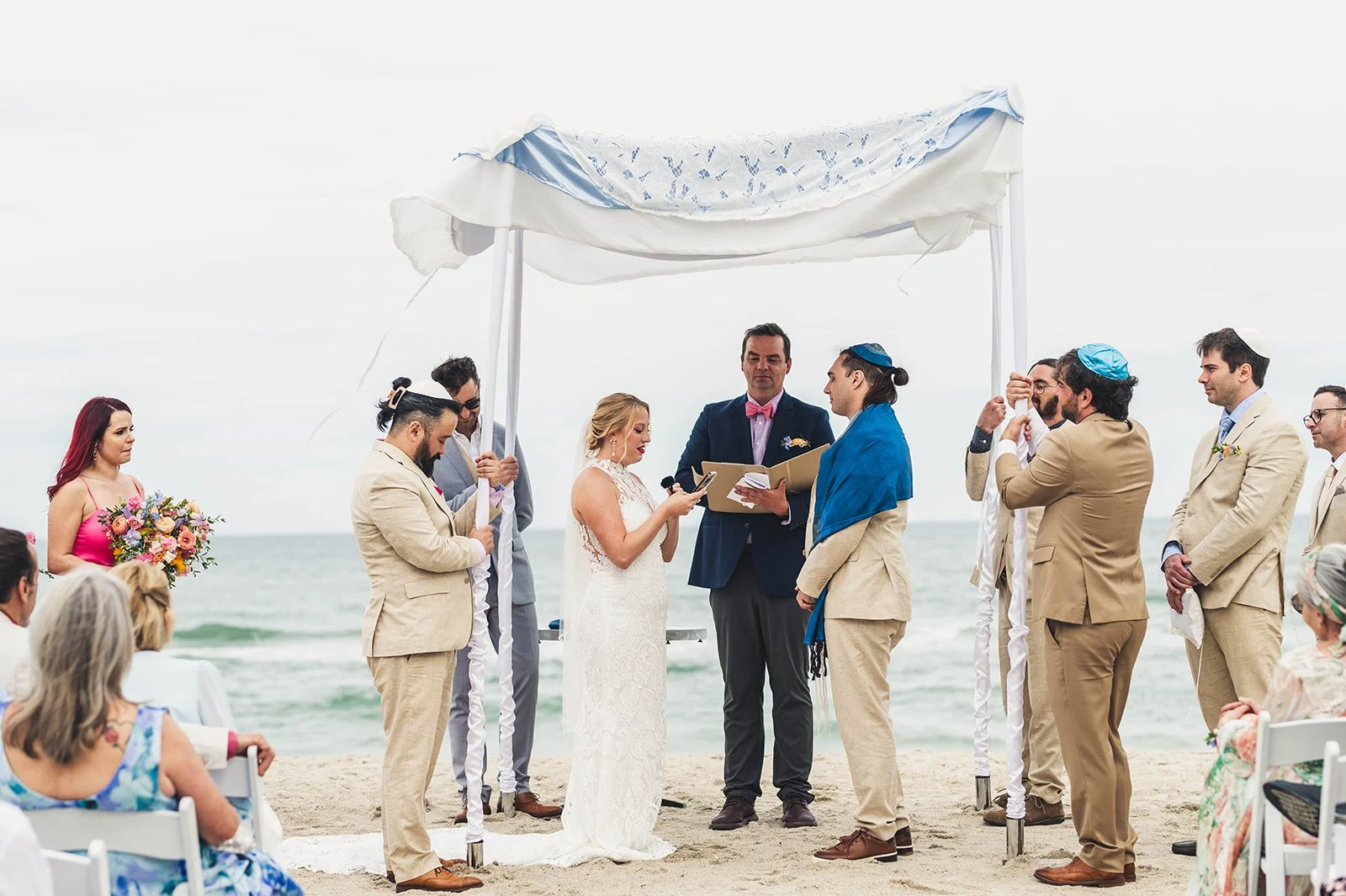
Photo by Abate Photo and Film
Reading a script silently and delivering it in front of a crowd of people are two very different things. Your officiant should practice out loud, ideally in front of at least one other person, well before the wedding day.
A few things to work through during practice:
Pacing - nerves make people rush; slower is almost always better
Pauses - build them in intentionally, especially before and after big moments
Eye contact - encourage your officiant to look up from the script as much as possible
The microphone - if there's a handheld or lapel mic, they need to know how it works before they're standing in front of everyone
The rehearsal is also a great time to walk through the full script with your officiant so everyone knows exactly how the ceremony flows.
Have a Final Script Ready Well Before the Wedding
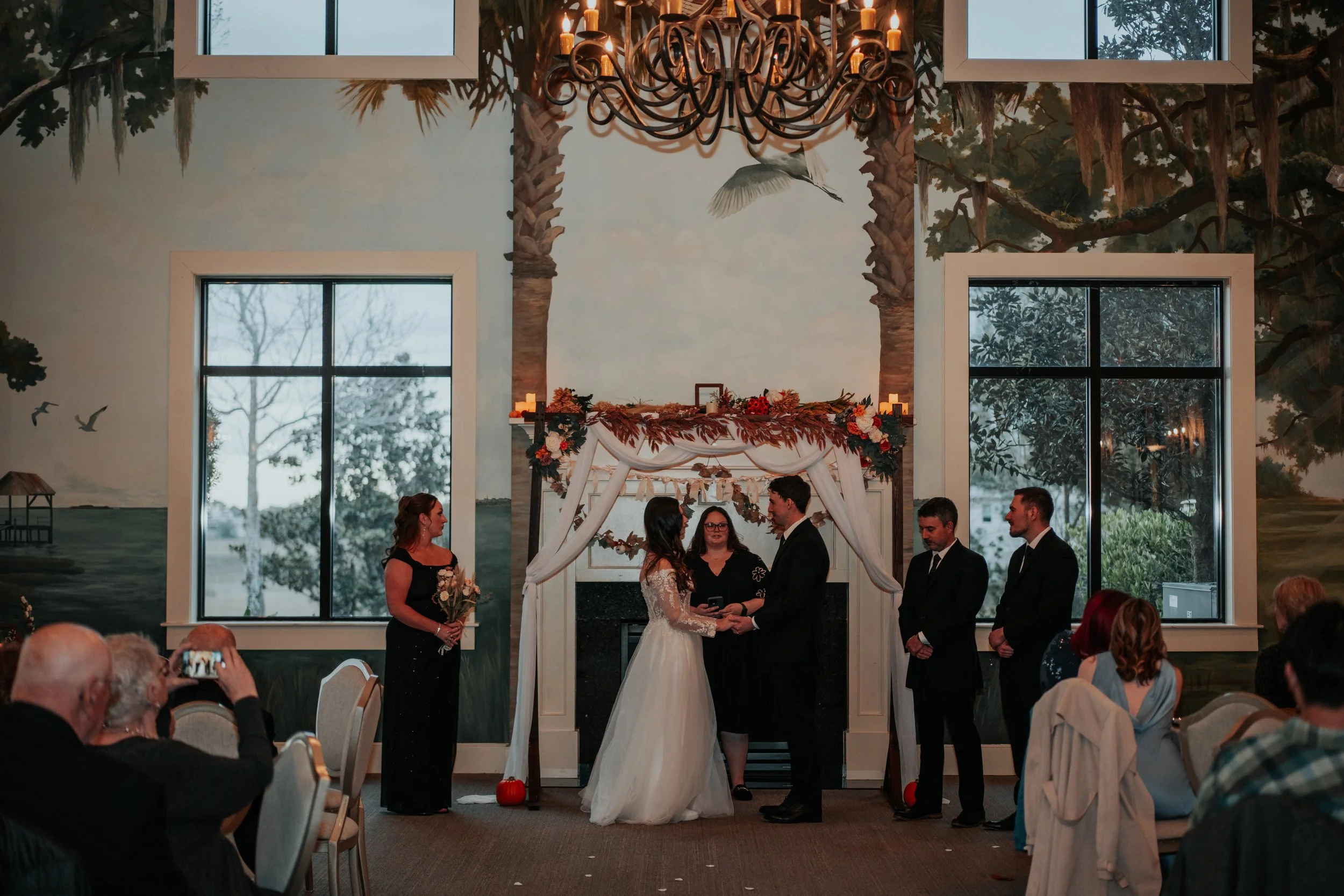
Photo by Laura Alexandra Photography
Aim to have a finalized script at least two to three weeks before the wedding. This gives everyone time to review it, make any last-minute adjustments, and feel confident heading into the day.
The script should be printed and formatted in a way that's easy to read - large enough font, double-spaced, with clear cues for where each element begins. Your officiant should never be squinting at their phone or flipping through loose pages at the altar.
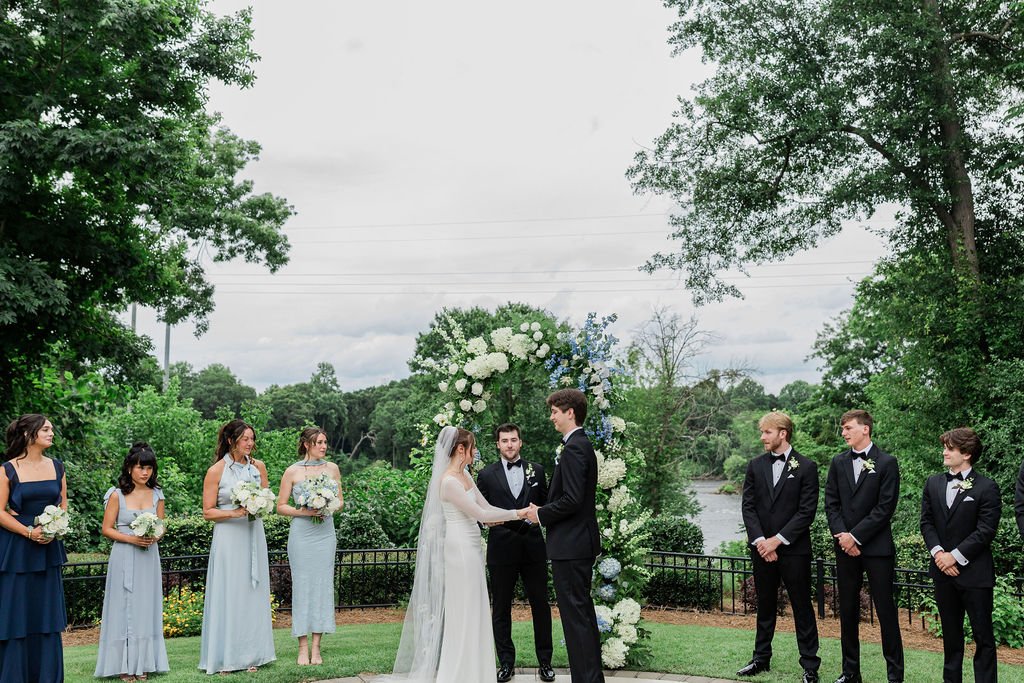
Photo by MSMP Media
A personal officiant brings something irreplaceable to a wedding ceremony - but the script is what gives them the foundation to do it beautifully. Put in the time to write it well, and that 20 minutes at the altar will be something everyone remembers.
At SC Signature Celebrations, we work closely with couples and their officiants to make sure the ceremony flows exactly the way it should - from the first processional step to the final recessional exit. If you're in the planning process and want a team in your corner, we'd love to connect.
Planner/Coordinator - SC Signature Celebrations
